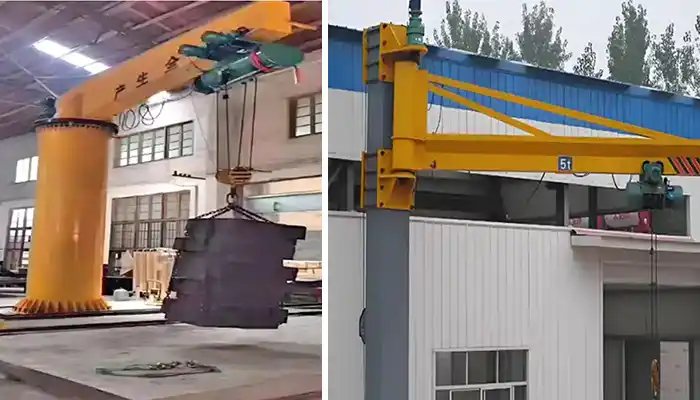
How to Choose the Right 5 Ton Jib Crane for Tropical Environments
menu_open
Content Quick Link
Introduction
Jib Cranes in Industrial Use
Jib cranes are essential lifting tools in factories, workshops, and warehouses. They excel at handling materials in tight spaces where larger cranes, like bridge or gantry cranes, aren’t practical. A 5 Ton jib crane provides a balance of strength and versatility, capable of lifting medium-duty loads efficiently while improving workflow.
Why Choosing the Right Crane Matters in Tropical Climates
In tropical environments, heat, humidity, and heavy rainfall can put extra stress on cranes. Selecting a standard crane without considering these conditions can lead to:
- Rust and corrosion on steel components
- Faster wear on moving parts
- Electrical failures in hoists or control systems
- Frequent maintenance and unexpected downtime
Main Tropical Challenges to Consider
- High Humidity: Moisture can penetrate bearings, motors, and insulation, reducing performance and lifespan.
- High Temperatures: Can cause overheating of motors and faster wear of mechanical parts.
- Heavy Rain & Monsoons: Exposed cranes need effective water protection for hoists, trolleys, and control panels.
- Corrosion Risk: Coastal or storm-prone areas increase metal deterioration if proper coatings aren’t applied.
A jib crane designed for tropical conditions isn’t just about lifting capacity. It’s about durability, safety, and operational reliability. Choosing the right crane upfront reduces maintenance costs, prevents downtime, and keeps your workflow running smoothly.
Tropical Environmental Factors and Their Impact on 5 Ton Jib Crane Design
Choosing a 5 Ton jib crane for tropical environments requires understanding the specific environmental challenges. High humidity, heat, heavy rain, and strong winds can directly affect crane performance, safety, and lifespan. By considering these factors, buyers can select a tropical-ready jib crane that offers long-term reliability.
Temperature & Humidity in Tropical Climates
High temperature and humidity are common in tropical regions and can significantly influence crane operation:
- Material Expansion: Heat can cause metal parts to expand, affecting alignment of jib arms and trolley movement.
- Motor & Hoist Performance: Overheating reduces efficiency of electric hoists and trolley motors.
- Condensation Issues: Humidity can cause moisture inside control panels, leading to short circuits or electrical failures.
- Wear & Tear: Bearings, gears, and hoist chains experience accelerated wear under constant heat and moisture.
Practical Considerations for Tropical Jib Cranes:
- Use heat-resistant electric hoists and trolley motors.
- Apply lubricants suitable for high-temperature, high-humidity environments.
- Ensure sealed electrical panels and hoists to prevent water ingress.
Rain & Monsoon Seasons
Heavy rain and monsoon storms present another set of challenges for jib cranes:
- Water Damage: Rain can affect electrical components, hoists, and trolleys.
- Structural Corrosion: Constant wet conditions can deteriorate steel structures over time.
- Operational Downtime: Without protection, outdoor jib cranes may require frequent maintenance.
Design Tips for Rain-Resistant Jib Cranes:
- Use IP-rated electrical enclosures for hoists and control panels.
- Install water-resistant covers or canopies over critical components.
- Provide proper drainage around mounting points and foundations.
Corrosion & Rust Risks
Tropical environments, especially near coastal areas, increase corrosion risks:
- Steel Degradation: Standard steel cranes can rust quickly under high humidity and salt-laden air.
- Safety Concerns: Even minor corrosion can reduce structural integrity and increase maintenance needs.
- Cost Implications: Frequent repainting or part replacement can raise operational costs.
Anti-Corrosion Measures:
- Use corrosion-resistant steel or stainless steel cranes.
- Apply UV and anti-rust protective coatings.
- Schedule regular inspection and maintenance focusing on joints, bolts, and moving parts.
Wind & Storm Loads
Occasional high winds or tropical storms can affect crane safety and stability:
- Load Swinging: Suspended loads can move dangerously in strong gusts.
- Structural Stress: The jib arm, mast, and base must withstand lateral wind forces.
- Outdoor Safety: Unsecured cranes may pose hazards during severe weather events.
Design Solutions for Wind-Resistant Jib Cranes:
- Reinforce jib arms and masts for rigidity under wind pressure.
- Follow local wind load codes and safety standards.
- Consider locking mechanisms for hoists and trolleys during storms.
Summary
Selecting a 5 Ton jib crane for tropical climates means more than choosing capacity and reach. By considering temperature, humidity, rain, corrosion, and wind load factors, buyers can ensure a reliable, long-lasting crane. Tropical-ready jib cranes reduce downtime, minimize maintenance, and maintain safe operations in challenging environments.
Determining Lifting Requirements for 5 Ton Jib Cranes in Tropical Environments
Selecting the right 5 Ton jib crane isn't just about the nominal lifting capacity. In tropical climates, factors like heat, humidity, and outdoor space constraints can influence crane performance and safety. Understanding your lifting requirements helps ensure the crane operates efficiently while minimizing maintenance and downtime.
Load Capacity
The crane's 5 Ton rating must match the maximum expected load in your workshop or outdoor area:
- Heavy Components: If you regularly lift items close to 5 tons, consider cranes with a slight buffer in capacity. This prevents overloading and extends service life.
- Load Variability: If the load varies, choose a crane that handles peak weights without straining hoists or trolley motors.
- Safety Margin: Tropical conditions can slightly reduce lifting efficiency due to heat affecting motor performance. Designing with a 10–15% safety margin is advisable.
Practical Tips:
- Verify maximum load per lift for your application.
- Check motor and hoist ratings for high-temperature performance.
- Ensure structural components can handle temporary overloads caused by moving loads in windy conditions.
Lift Height & Reach
The physical layout of your facility affects the jib crane's mast height and arm length:
- Warehouse Constraints: Low ceilings or tight spaces may require shorter mast heights or pivoting arms.
- Outdoor Operations: Outdoor tropical cranes need longer reach to cover larger loading areas but must maintain stability in wind and rain.
- Workflow Efficiency: Proper arm length ensures smooth material handling without repositioning loads multiple times.
Design Considerations:
- Measure ceiling height, wall clearance, and operational radius.
- Choose a boom length and mast height that accommodates maximum lift height safely.
- For outdoor cranes, ensure wind load calculations are factored into mast and arm design.
Frequency of Use
How often the crane will be used influences whether a light-duty, medium-duty, or heavy-duty design is appropriate:
- Heavy-Duty Operations: Daily lifting near the maximum capacity requires reinforced jib arms, robust hoists, and more frequent maintenance.
- Light-Duty or Occasional Use: Cranes used sporadically may not need as heavy a design, but corrosion and rain protection remain important in tropical climates.
- Duty Cycle Considerations: Electric hoists should be selected with tropical duty ratings to handle heat and humidity without overheating.
Practical Tips:
- Match crane duty class to operational frequency.
- Consider motor duty cycle ratings for tropical conditions.
- Factor in maintenance intervals for bearings, hoist chains, and electrical components.
Summary
Determining lifting requirements goes beyond the 5 Ton label. By carefully considering load capacity, lift height, reach, and frequency of use, buyers can select a tropical-ready jib crane that is safe, durable, and suited to their workspace. This ensures smooth operations even in high humidity, heat, and outdoor tropical conditions.
Floor-Mounted vs. Wall-Mounted 5 Ton Jib Cranes
Choosing between a floor-mounted and wall-mounted 5 Ton jib crane depends on your workshop layout, lifting requirements, and tropical environment conditions. Both types have advantages and trade-offs, so understanding these differences helps ensure safe and efficient operations.
Floor-Mounted Jib Cranes
Floor-mounted jib cranes are supported by a vertical mast anchored to the floor, providing strong stability and flexible positioning.
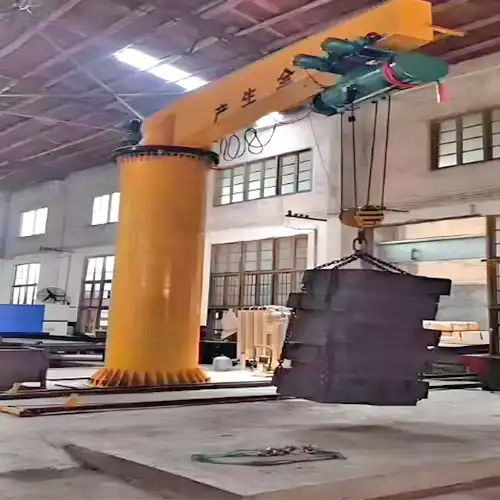
Pros:
- Greater Mobility: The crane can rotate and cover a wide area, making it suitable for varying workflow patterns.
- Higher Load Support: Robust base allows for lifting heavier or frequent loads safely.
- Flexible Positioning: Mast location can be adjusted to suit operational needs.
Cons:
- Larger Footprint: Requires sufficient floor space, which may be limited in smaller workshops.
- Foundation Requirements: Proper concrete footings or base plates are needed to ensure stability.
Design Considerations for Tropical Environments:
- Reinforce base to withstand soil moisture and potential flooding.
- Apply corrosion-resistant coatings on base plates and mast.
- Ensure crane rotation and slew mechanisms are sealed against humidity and rain.
Wall-Mounted Jib Cranes
Wall-mounted jib cranes are attached to strong structural walls, making them ideal for confined or narrow spaces.
 wall mounted jib crane 5 ton for sale
Pros:
- Space-Saving: Requires minimal floor space, freeing up room for workflow.
- Ideal for Confined Areas: Perfect for small workshops, assembly lines, or loading bays.
Cons:
- Wall Strength Limitations: Only suitable where walls can handle the load and torque.
- Less Flexibility: Crane position is fixed; coverage area is limited by wall location.
Design Considerations for Tropical Environments:
- Ensure wall supports are treated or coated to resist corrosion.
- Check for humidity-related weakening in concrete or steel structures.
- Install covers or shelters if crane operates outdoors to prevent water damage.
Decision Factors
When choosing between floor-mounted and wall-mounted 5 Ton jib cranes, consider:
- Space Availability: How much floor or wall space is available for installation.
- Workflow Patterns: Areas where loads need to be moved frequently or in multiple directions.
- Installation Feasibility: Foundation strength for floor-mounted cranes or wall integrity for wall-mounted cranes.
- Environmental Protection: Both types require corrosion and water protection in tropical climates.
Floor-mounted cranes offer more flexibility and load support but require space and strong foundations. Wall-mounted cranes save space and are ideal for confined areas but have limitations in coverage and load. Understanding your workshop layout, tropical climate challenges, and operational needs will help you select the right 5 Ton jib crane for reliable, long-lasting performance.
Material & Structural Considerations for 5 Ton Jib Cranes in Tropical Environments
In tropical climates, proper material selection and structural design are critical to ensure long-term crane performance. High humidity, heavy rain, and intense sun can accelerate corrosion and reduce the lifespan of a poorly designed crane. Selecting corrosion-resistant materials, protective coatings, and reinforced structures helps maintain safe and efficient operations.
Corrosion-Resistant Materials
The materials used in your jib crane determine how well it withstands tropical conditions:
Practical Recommendations:
- Galvanized Steel: Offers protection against rust and is suitable for both indoor and outdoor cranes.
- Stainless Steel: Ideal for extremely humid or coastal areas where salt-laden air increases corrosion risk.
- Coated Metals: Epoxy or powder-coated steel adds another layer of defense against moisture and UV exposure.
Benefits:
- Reduces maintenance and repainting frequency.
- Extends the operational life of hoists, trolleys, and structural components.
- Maintains structural integrity under heat, humidity, and rainfall.
Protective Coatings & Paints
Even corrosion-resistant metals need additional protection for tropical environments:
Best Practices:
- Anti-Rust Paints: Prevent oxidation on steel surfaces, especially at joints and welds.
- UV-Resistant Coatings: Protect surfaces from sun exposure that can degrade paint and metal over time.
- Weatherproof Finishes: Ensure protection against rain, moisture, and salt air in coastal regions.
Benefits:
- Keeps the crane looking and performing like new for longer periods.
- Prevents corrosion that could compromise safety.
- Reduces downtime and long-term maintenance costs.
Structural Design
A 5 Ton jib crane's structure must be engineered to handle tropical environmental stress:
Key Considerations:
- Reinforced Arms: Strengthened booms reduce flexing or bending under heavy loads or high winds.
- Sturdy Mast: Supports vertical load and resists lateral forces caused by wind or load swing.
- Joint & Base Reinforcement: Bolts, brackets, and connections should withstand corrosion and mechanical stress.
Benefits:
- Maintains stability and safety during operation.
- Reduces the risk of structural fatigue from frequent or heavy use.
- Ensures compliance with safety standards in tropical and outdoor environments.
Summary
Selecting the right materials, coatings, and structural design is essential for 5 Ton jib cranes in tropical environments. Using corrosion-resistant metals, protective finishes, and reinforced structures ensures safe lifting, reduces maintenance, and extends the crane's operational life, even in humid, rainy, or coastal conditions.
Hoist and Trolley Selection for 5 Ton Jib Cranes in Tropical Environments
Choosing the right hoist and trolley is essential for a 5 Ton jib crane to perform reliably in tropical climates. Heat, humidity, and rain can impact lifting efficiency, safety, and maintenance, so careful selection ensures smooth operation and long service life.
Electric vs. Manual Hoist
Electric hoists are generally preferred for tropical conditions due to their efficiency and consistent performance:
- Ease of Operation: Reduces manual effort and fatigue for operators, especially in heavy-duty or frequent lifting tasks.
- Consistent Lifting: Maintains smooth operation even under high humidity and heat, preventing strain on the hoist and crane structure.
- High Capacity Handling: Ideal for repeated lifting of loads close to the 5 Ton maximum rating.
Manual hoists may be suitable for light-duty or occasional lifting but are slower, require more effort, and can be harder to operate safely in hot, humid environments.
Trolley Options
The trolley allows horizontal movement along the jib arm and must be designed for tropical conditions:
- Corrosion-Resistant Wheels: Coated or stainless-steel wheels prevent rust from humidity or rain exposure.
- Smooth Operation: Bearings and wheels designed to handle high temperatures ensure consistent load movement.
- Load Stability: Reduces sway and ensures precise positioning of heavy materials.
Load Controls & Safety Devices
Safety is critical in tropical environments where moisture and heat can affect crane performance:
- Overload Protection: Prevents motor burnout and structural stress if the crane is accidentally overloaded.
- Limit Switches: Automatically stops hoists at maximum and minimum lifting heights.
- Emergency Stops: Provides instant shutdown for operator safety and accident prevention.
For 5 Ton jib cranes in tropical environments, selecting an electric hoist with a corrosion-resistant trolley and integrated safety devices ensures smooth, safe, and reliable lifting operations. Proper hoist and trolley selection reduces downtime, minimizes maintenance, and extends the operational life of the crane even under high humidity, heat, and outdoor exposure.
Power Supply & Electrical Considerations for 5 Ton Jib Cranes in Tropical Environments
Electrical performance is critical for jib cranes operating in tropical climates. High humidity, rain, and occasional voltage fluctuations can impact hoist efficiency, trolley movement, and overall crane safety. Designing or selecting a crane with reliable electrical systems ensures consistent operation and minimizes downtime.
Voltage & Current Compatibility
Tropical regions often experience power fluctuations or short interruptions. To ensure safe and efficient crane operation:
- Match Local Power Supply: Ensure the crane's hoist and trolley are compatible with local voltage and frequency.
- Use Surge Protection: Protect motors and control systems from spikes caused by unstable power.
- Account for Load Demand: Electric hoists operating near 5 Ton capacity require stable voltage to avoid overheating or reduced performance.
Sealed Electrical Components
Humidity and water exposure are major concerns in tropical climates. Proper sealing prevents corrosion and electrical failure:
- IP-Rated Enclosures: Hoists, control panels, and limit switches should have sufficient IP protection against moisture.
- Waterproof Switches & Buttons: Critical for outdoor or semi-outdoor cranes to prevent short circuits.
- Protected Wiring: Cables and connectors should be insulated and resistant to humidity and heat.
Maintenance-Friendly Design
Ease of inspection and replacement reduces downtime and ensures long-term reliability:
- Accessible Panels: Motors, control boxes, and trolley components should be easy to reach.
- Modular Components: Replaceable parts minimize repair time and costs.
- Routine Inspection Points: Schedule checks for corrosion, wear, and electrical integrity.
For 5 Ton jib cranes in tropical environments, reliable electrical systems are essential. Ensuring voltage compatibility, sealed components, and maintenance-friendly design reduces risk of failures, improves safety, and keeps cranes operating efficiently even under high humidity, heat, and rain. Proper electrical planning is as important as structural and material considerations for tropical-ready jib cranes.
Installation & Maintenance Planning for 5 Ton Jib Cranes in Tropical Environments
Proper installation and ongoing maintenance are crucial to ensure a 5 Ton jib crane operates safely and efficiently, especially in tropical climates. High humidity, heavy rain, and heat can affect both structural integrity and electrical performance if planning is overlooked.
Installation Considerations
A well-planned installation provides stability, safety, and long-term reliability:
- Foundation Requirements: Floor-mounted cranes need strong concrete footings to handle the crane's weight and load capacity. Foundations should resist moisture and potential flooding.
- Wall Support: Wall-mounted cranes require reinforced walls capable of withstanding lateral forces, torque, and repeated lifting cycles.
- Weather Protection: For outdoor cranes, consider positioning away from direct rain exposure, or add overhangs or shelters to protect critical components.
Routine Maintenance
Regular maintenance ensures the crane remains reliable and safe in humid and rainy conditions:
- Lubrication Schedules: Bearings, hoist chains, trolley wheels, and pivot points should be lubricated frequently to prevent corrosion and reduce wear.
- Corrosion Checks: Inspect structural components, joints, and bolts for rust or signs of deterioration. Apply anti-rust coatings when necessary.
- Motor and Electrical Inspections: Check hoist motors, limit switches, and electrical panels for moisture damage or insulation wear.
Environmental Adaptations
Tropical climates often require additional adaptations to protect crane components:
- Covers and Canopies: Shields hoists, trolleys, and control panels from direct rain and sunlight.
- Enclosures: Electrical panels and motors may need fully sealed housings (IP-rated) for outdoor operation.
- Drainage Solutions: Ensure water cannot accumulate around the crane base or foundation, preventing corrosion or instability.
Installation and maintenance are key to extending the life of a 5 Ton jib crane in tropical environments. Proper foundations or wall support, regular lubrication and corrosion inspections, and environmental adaptations such as covers and enclosures ensure safe, reliable, and efficient crane operation even under heat, humidity, and heavy rain.
Safety & Compliance for 5 Ton Jib Cranes in Tropical Environments
Safety and compliance are critical when operating 5 Ton jib cranes in tropical regions. High humidity, heavy rainfall, and occasional storms increase risks, making adherence to local regulations, operator training, and emergency protocols essential.
Local Safety Regulations
Compliance with safety standards ensures legal operation and protects workers:
- OSHA or Local Industrial Standards: Verify that crane installation, operation, and maintenance meet local safety requirements.
- Load Ratings and Duty Cycles: Ensure the crane's specifications align with permitted lifting capacities and operational frequency.
- Inspection & Certification: Regular inspections may be required for compliance, including structural, mechanical, and electrical checks.
Operator Safety
Proper training and ergonomic considerations protect workers and improve efficiency:
- Training Requirements: Operators should be trained in safe lifting practices, crane operation, and emergency procedures.
- Ergonomics: Controls should be positioned for comfortable operation, reducing fatigue in hot and humid conditions.
- PPE (Personal Protective Equipment): Ensure operators wear gloves, helmets, and protective clothing appropriate for tropical climates.
Emergency Protocols
Tropical environments may pose additional hazards such as storms, heavy rain, or lightning:
- Weather Monitoring: Stop crane operation during high winds, lightning, or heavy rainfall.
- Storm Protection: Outdoor cranes should have lockable positions or be secured during severe weather.
- Emergency Stops & Shutdown Procedures: Ensure hoists and trolleys can be quickly stopped to prevent accidents.
Ensuring safety and compliance for 5 Ton jib cranes in tropical regions requires adherence to local regulations, proper operator training, ergonomic controls, and robust emergency protocols. These measures protect workers, reduce operational risks, and ensure the crane remains reliable even under high humidity, rain, or storms.
Buyer Takeaways: Selecting the Right 5 Ton Jib Crane for Tropical Environments
Choosing the right 5 Ton jib crane for tropical climates requires careful consideration of environmental conditions, crane design, and operational needs. By focusing on key factors, buyers can ensure safe, reliable, and long-lasting crane performance.
Selection Checklist
A practical checklist helps buyers make informed decisions:
- Crane Type: Decide between floor-mounted and wall-mounted based on space, workflow, and load coverage.
- Load Capacity & Duty Cycle: Ensure the 5 Ton rating meets maximum expected loads and operational frequency.
- Materials & Coatings: Choose corrosion-resistant metals, protective paints, and UV-resistant finishes.
- Hoist & Trolley: Prefer electric hoists with corrosion-resistant trolleys and integrated safety devices.
- Electrical Systems: Confirm voltage compatibility, IP-rated enclosures, and maintenance-friendly design.
- Installation & Foundation: Verify foundation or wall support, weather protection, and stability for outdoor use.
- Safety & Compliance: Follow local regulations, provide operator training, and establish emergency protocols.
Matching Crane Design to Environmental Conditions
Tropical climates require cranes designed for heat, humidity, rain, and wind:
- Material and coatings should resist corrosion and UV damage.
- Hoists and electrical components must be sealed and protected against moisture.
- Structural reinforcements ensure stability during storms or heavy rain.
Long-Term Operational Benefits
Investing in a crane suited for tropical conditions provides significant advantages:
- Safety: Reduces risks for operators and minimizes downtime due to mechanical or electrical failures.
- Reliability: Maintains consistent lifting performance even under high heat, humidity, or outdoor exposure.
- Reduced Maintenance: Corrosion-resistant materials, protective coatings, and routine inspections lower repair costs and extend service life.
Selecting the right 5 Ton jib crane for tropical environments is not just about lifting capacity. Buyers should consider crane type, materials, hoist and trolley design, electrical systems, and installation conditions. By doing so, they secure safe, reliable, and low-maintenance operations, ensuring the crane delivers long-term value even in challenging tropical climates.
Conclusion
Choosing the right 5 Ton jib crane for tropical environments is about more than just lifting capacity. High humidity, heat, heavy rain, and occasional storms can impact performance, safety, and longevity if not properly planned for.
Key Takeaways for Buyers:
- Load & Design: Ensure the crane’s capacity and type match your workflow and lifting requirements.
- Materials & Protection: Use corrosion-resistant steel, protective coatings, and UV-resistant finishes for durability.
- Hoist & Trolley: Select electric hoists with sealed, maintenance-friendly components and corrosion-resistant trolleys.
- Electrical Systems: Check voltage compatibility, IP-rated enclosures, and easy access for inspections.
- Installation & Maintenance: Prepare foundations or wall supports, plan for weather protection, and schedule regular lubrication and inspections.
- Safety & Compliance: Follow local regulations, train operators, and implement emergency protocols for tropical weather.
Why Planning Matters:
- Reduces downtime caused by corrosion, wear, or electrical issues.
- Ensures safe and smooth crane operation in humid and rainy conditions.
- Extends the crane’s lifespan, giving you long-term value for your investment.

Article by Bella ,who has been in the hoist and crane field since 2016. Bella provides overhead crane & gantry crane consultation services for clients who need a customized overhead travelling crane solution.Contact her to get free consultation.